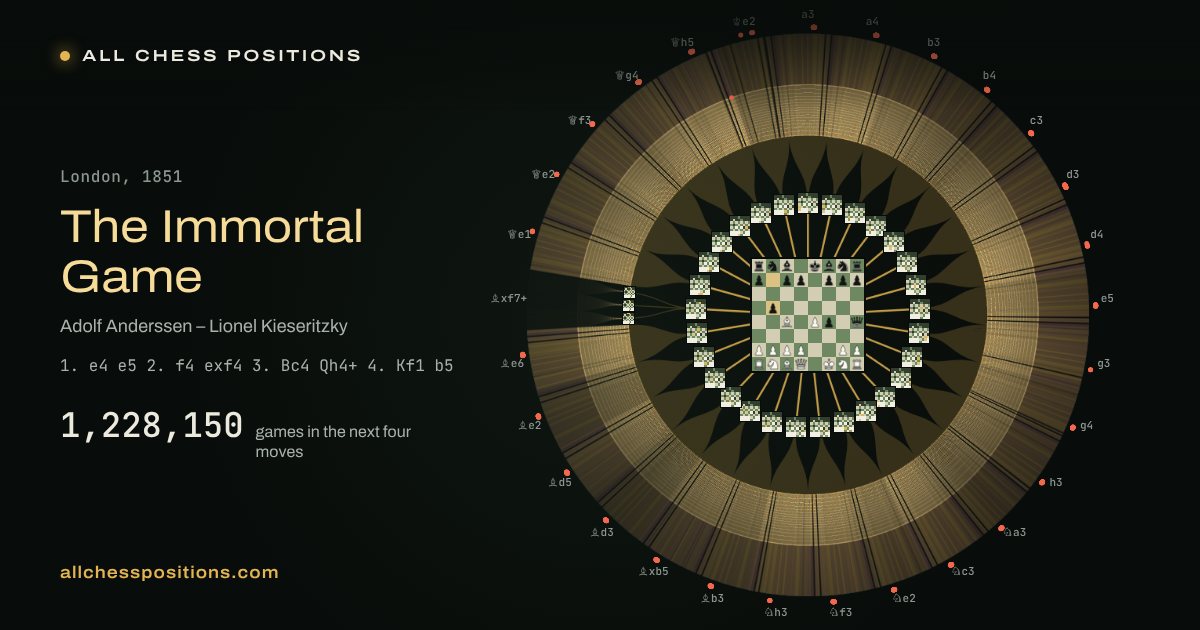
Adolf Anderssen and Lionel Kieseritzky played this casual game in London in 1851, during a break in the first international chess tournament. Kieseritzky was so impressed that he sent the moves to his chess club in Paris, and the game was published that summer.
Anderssen gives up a bishop, both rooks and finally his queen, and mates with the three minor pieces he has left: 22. Qf6+ Nxf6 23. Be7#. The Austrian master Ernst Falkbeer called it “the Immortal Game” in 1855.
Kieseritzky probably resigned before the mate was played on the board, but the score that is always reproduced goes on to the famous finish.
The position where the game leaves the named openings, with every game of the next four moves around it.